Guidelines for Ordination Aspirants
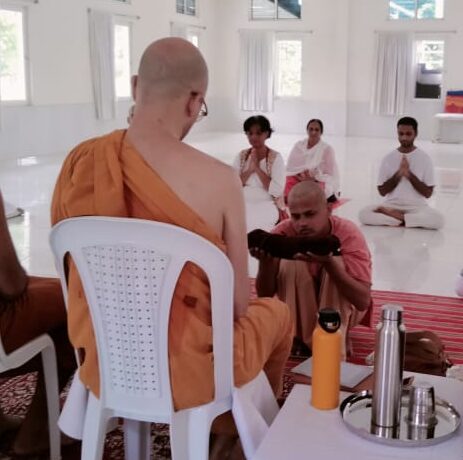
Sangharama Monastery welcomes all who wish to live the monastic life in a spirit of renunciation, humility, sincerity, discipline, and harmony. Those seeking ordination should clearly understand:
- Sangharama is a training ground for those who wish to walk the path that leads towards end of all Suffering with a sincere heart and faith in Buddha, Dhamma and Sangha.
- At Sangharama we follow Heart Dhamma tradition which is nothing but the Buddha’s teachings with the emphasis on heart qualities like sincerity, humility and honesty
- Entering probation for ordination means living in accordance with the guidance of the resident Dhamma teachers, the monastery’s daily schedule, and guidelines.
- Ordination Aspirants are expected to commit sincerely to the community’s way of training and uphold harmony with the Sangha.
Ordination is a privilege and commitment, not a right. It is a shared vow to uphold Vinaya discipline, sincerity of heart, and collective harmony of the Sangha.
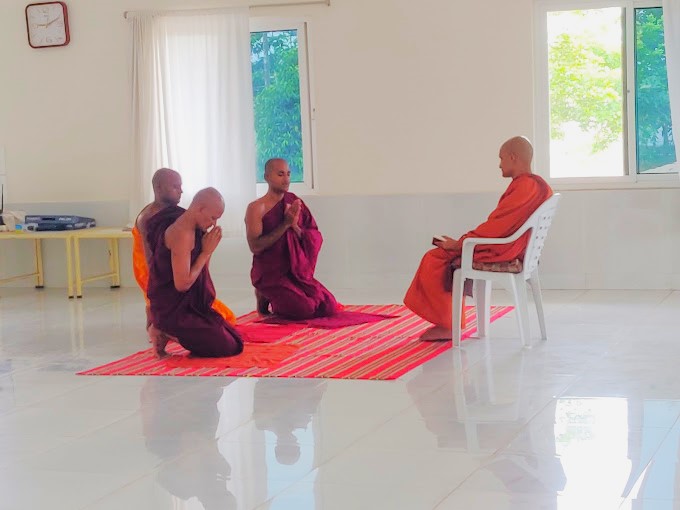
Sangharama does not offer temporary ordination to any applicants. Ordination is a progressive process that requires dedicated training. An applicant must first undergo probation as an Upāsaka (lay practitioner) and later as a Sāmaṇera (novicemonk) before becoming eligible for Upasampadā (higher ordination).
1. Basic Eligibility Criteria
The applicant must be:
- Male, at least 18 years old.
- Completed at least 12th grade (or equivalent education).
- Free from criminal record.
- Free from serious mental illness (e.g., psychosis).
- Free from substance abuse for at least six months.
- No history of creating schism in a monastic community.
- Free from debts
- Free from legal obligations (e.g., military or government service).
- Not disqualified by Vinaya:
- A Bhikkhu who has committed a Pārājika offense is permanently disqualified.
- A Bhikkhu who committed an unconfessed Saṅghādisesa offense must undergo probation equal to the period of concealment.
2. Health and physical requirements
- As per the Buddha’s Vinaya, applicants sufering from leprosy, boils, eczema, tuberculosis, epilepsy, or any serious chronic or incurable disease are ineligible for ordination.
- Those who are physically handicapped, feeble, or deformed in a way that hinders monastic life cannot be ordained.
- Applicants with visible inappropriate tattoos that contradict a Bhikkhu’s ideals are advised to have them removed before ordination.
3. Age limit & Commitment
Ordination at Sangharama is not determined by age, length of stay, personal preference or outward appearance of practice, but by the arising of the right conditions.
- When the causes of faith, sincerity, humbleness, maturity of practice, discipline, and harmony with the Sangha are present, ordination may ripen naturally.
- Aspirants should know that one may be deemed ready for ordination swiftly if the conditions are complete, while another may remain in training for many years until the necessary conditions are ripeand mature.
- Ordination cannot be hurried, nor can it be delayed. It is a matter of conditionality and ripeness of heart, not of time alone.
4. Expectation
- Live as an Anagārika (Eight Precepts).
- Follow all rules as if already ordained.
- Show faith, humbleness, humility, service, and willingness to learn.
5. Daily Schedule (Indicative)
- 4:00 am – Wake up, Exercise
- 4:30 am – Group meditation
- 6:00 am – Alms round (where practiced) or breakfast
- 8:00 am – Group meditation
- 9:30 am – Interview
- 10:50 am – Main meal
- 12:00 pm – Rest
- 1:00 pm – Meditation (sitting and walking)
- 5:00 pm – Refreshment ( Juice )
- 6:00 pm – Personal meditation, study, or seclusion
- 10:00 pm – Lights Out
6. Dress Code
- White or brown upper and lower cloth (traditional Anagārika attire). For eg: A simple White Kurta & Pajama, Lungi or dhoti is fine.
- No ornaments, perfumes, or colored clothes.
7. What to Bring
- Valid proof of Identity document like Passport and Aadhaar Card for documentation and verification.
- White clothing
- Toiletries
- Notebook and stationaries
- Personal items
- Personal Medicines
8. Spiritual Commitment
- Practice sincerely with a view to ordination.
- Receive guidance with faith and humility from the resident Dhamma teachers.
- Avoid intellectual pride, conceit of any kind and remain open to learning.
- Be sincere, humble, paitent and diligent in practice of dhamma.
9. Volunteering Responsibilities
- Assist in monastery duties: cleaning, serving food, organizing events, etc.
- Service is part of training in humility, harmony and merit-making
10. Approval Process
- Fill and submit the application.
- Approval or Decline of application.
- If approved, Trial stay followed by feedback from Sangha.
- Final decision rests with the Sangharama Bhikkhu Sangha Committee.
- If deemed ripe and mature, aspirants may be ordained as Sāmaṇera.
- Higher ordination (Upasampadā) may only be given when both inner maturity and community harmony are clearly established.
Spirit of Ordination
To ordain at Sangharama is to enter the living lineage of the Buddha’s disciples — a life of discipline, humility, and sincere practice of the Dhamma-Vinaya. It is both privilege and responsibility: a commitment to walk the path toward the end of suffering with faith in the Buddha, Dhamma and Sangha.
May all who enter Sangharama uphold these guidelines with sincerity, leading to the purification of theheart, the welfare of the Sangha, and the realization of the ultimate goal—Nibbāna.