Guidelines for Nuns
Residency Principle
Sangharama welcomes all who wish to deepen their monastic practice in a disciplined and contemplative environment. While short-term visitors are welcome, those seeking long-term residency should clearly understand:
- Sangharama is a training ground for those who wish to walk the path that leads towards end of all Suffering with a sincere heart and faith in Buddha, Dhamma and Sangha.
- At Sangharama we follow Heart Dhamma tradition which is nothing but the Buddha’s teachings with the emphasis on heart qualities like sincerity, humility and honesty.
- Residency means living in accordance with the guidance of the resident teacher, the monastery’s daily schedule, and guidelines.
- Long-term residents are expected to commit sincerely to the community’s way of training and uphold harmony with the Sangha.
Residency at Sangharama is both a privilege and a commitment — a shared vow to uphold Dhamma-Vinaya, sincerity of Heart, and collective harmony of the Sangha.
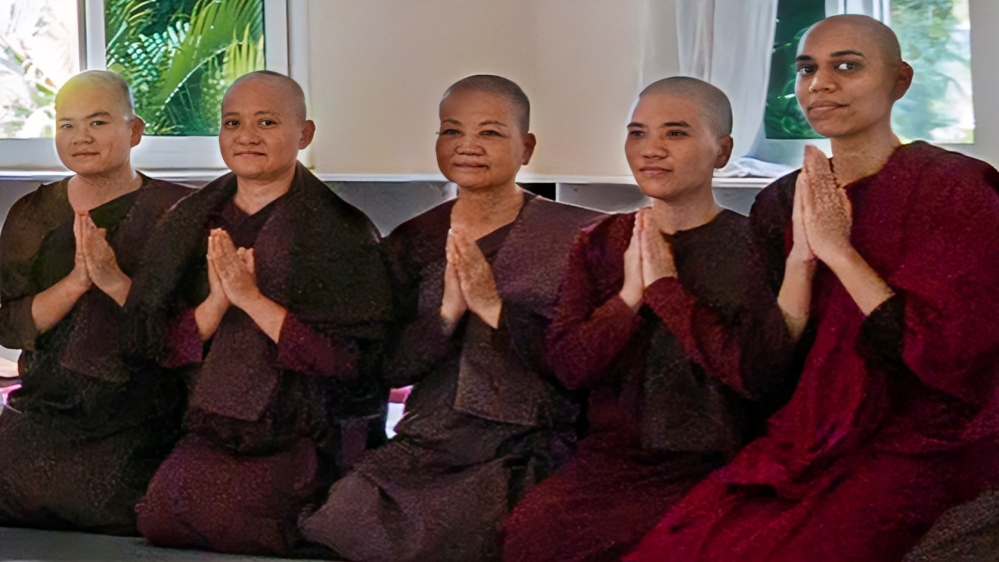
To maintain discipline, harmony, and purity within the monastic community, all resident nuns are expected to follow these guidelines:
1. Observance of the Eight Garudhammas (Great Rules for Bhikkhunis)
The Eight Garudhammas are fundamental principles that nuns (Bhikkhunis) must observe in relation to the Bhikkhu Sangha. These rules were established to uphold the discipline and ensure the guidance of nuns by senior monks.
- Respect towards monks – A fully ordained nun must always show respect to a monk, even if she has been ordained for a hundred years while the monk has been ordained for just one day.
- Ordination under monks – A nun must receive ordination from both the Bhikkhu Sangha (monks) and Bhikkhuni Sangha (nuns).
- Receiving instruction – A nun must approach the Bhikkhu Sangha twice a month for teachings and guidance.
- Rain Retreat discipline – During the Vassa (Rain Retreat), a nun must reside in a place assigned by both the Bhikkhu and Bhikkhuni Sangha.
- Accountability – A nun must formally seek advice from the Bhikkhu Sangha regarding any offenses committed.
- Reordination procedure – A nun who has broken the monastic discipline must undergo penance and seek reinstatement before both the monks and nuns.
- No admonition of monks – A nun should not criticize or rebuke a monk,whereas monks may provide constructive guidance to nuns.
- Adherence to the Vinaya – Even in matters of Dhamma practice, a nun must always seek guidance from the Bhikkhu Sangha.
By following these principles, nuns maintain harmony with the monks and ensure the continuation of their training in the Buddha’s monastic tradition.
2. Adherence to Precepts and Vinaya
- Fully ordained bhikkhunis should observe the Bhikkhuni Patimokkha (monastic code).
- Samaneris, Sayalays (Ten-Precept Nuns) should follow the Dasasila (Ten Precepts).
3. Commitment to Meditation and Dhamma Practice
- A nun should dedicate time to meditation, Dhamma study, and practice under the guidance of resident Dhamma teacher of the monastery.
- Silence (Noble Silence) should be observed in meditation areas.
- Participation in group meditation and Dhamma discussions is encouraged.
4. Respect and Harmony in the Community
- Treat fellow practitioners with kindness, humility, and respect.
- Avoid gossip, arguments, or divisive speech.
- Follow proper monastic etiquette when interacting with monks, teachers, and lay supporters.
5. Simplicity and Renunciation
- Live a simple life, using only what is necessary for practice.
- Maintain cleanliness and order in living quarters and shared spaces.
- Avoid attachment to material possessions and practice contentment with what is given.
6. Dependence on Alms and Offerings
- Bhikkhunis, Samaṇeris and Sayalays should rely on dana (offerings from lay supporters) for their sustenance and practice contentment with what is given.
- Refrain from accepting money.
7. Observing Proper Conduct and Safety
- Nuns should not stay alone but in the company of fellow nuns for the safety and discipline.
- Any required travel should be accompanied by a fellow nun or a trusted layperson.
- Follow the rules of interaction with the opposite gender, avoiding unnecessary contact with laypeople.
8. Service and Contribution to the Sangha
- Help in maintaining the monastery through mindful service such as cleaning, organizing, and Dhamma activities.
9. What to Bring
- Valid Proof of Identification like Passport or Aadhar Card for documentation and verification.
10. Monastery’s Daily Schedule (Indicative)
- 4:00 am – Wake up, Exercise
- 4:30 am – Group meditation
- 6:00 am – Alms round (where practiced) or breakfast
- 8:00 am – Group meditation
- 9:30 am – Interview
- 10:50 am – Main meal
- 12:00 pm – Rest
- 1:00 pm – Meditation (Sitting and Walking)
- 5:00 pm – Refreshment (Juice)
- 6:00 pm – Personal meditation, study, or seclusion
- 10:00 pm – Lights Out
Let these guidelines be a source of discipline, wisdom, and protection in your journey as a renunciant.
May all who enter Sangharama uphold these guidelines with sincerity, leading to the purification of the heart, for the welfare of oneself and others, and the realization of the ultimate goal—Nibbāna.